Strategic Industry Overview
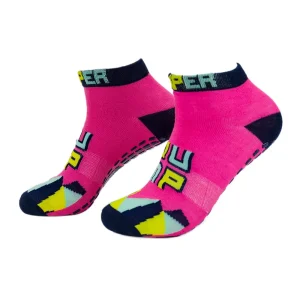
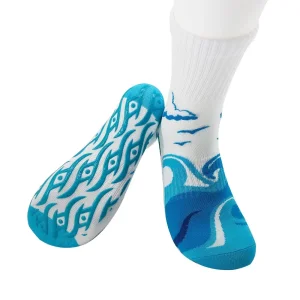
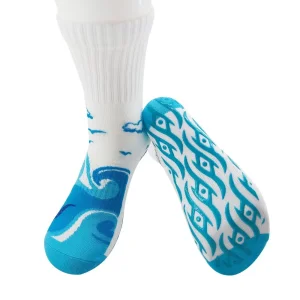
The global entertainment and indoor sports park sector has experienced massive capitalization over the last decade. Indoor trampoline parks, ninja warrior courses, and action-adventure facilities require strict safety measures to lower injury liabilities. Among these safety measures, polyester trampoline grip socks represent the primary point of contact between the participant and the high-tension elastic beds. These specialized hosiery products are essential safety gear, specifically designed to optimize the coefficient of friction and improve structural stability.
Selecting the right materials is critical for high-use commercial parks. Polyester (Polyethylene Terephthalate) has surpassed traditional cotton as the standard for high-performance park use. Its molecular structure offers superior tensile strength, excellent resistance to abrasions, and minimal moisture retention. During high-intensity jumping, friction produces rapid heat and sweat. Polyester fibers draw moisture away from the skin and disperse it across a wide surface area for quick evaporation, preserving the mechanical hold between the sock fabric and the custom-printed silicone or plastisol grips.
From an industrial perspective, the production of these technical garments requires highly automated infrastructure. Reliable factories must use advanced computerized knitting and precise automated screen-printing machinery. This ensures consistency across massive production runs, helping multi-location brand franchises protect their operational safety standards and keep unit costs low.
Square Meters Production Area
Annual Production Capacity (Pairs)
Countries Exported Worldwide
Technical & Polymer Engineering
Different fibers behave differently under mechanical stress. Below is an engineering overview of the properties that make polyester the preferred choice for commercial trampoline socks.
Polyester fibers resist stretching, shrinking, and wrinkling. Under repeated high-g impacts, the fabric preserves its structural shape to prevent slipping or bunching on the foot.
Polyester has high heat resistance, allowing for durable thermal curing of silicone and plastisol anti-slip grips. This ensures the safety pads remain bonded through high-friction use and laundering cycles.
Unlike hydrophilic cotton, which absorbs moisture and swells, polyester repels water. This quick-drying property reduces bacteria buildup and keeps the interior dry, maintaining a sanitary environment.
Advanced Smart Manufacturing Ecosystem
Established in 2013, Sichuan MiFo Technology Co., Ltd. is a leading modern manufacturer in the high-performance technical hosiery sector. By merging product design, raw material sourcing, automated knitting, and global trade, MiFo Technology sets a benchmark for scale and efficiency from its base in Sichuan, China.
With an production facility covering 42,000 square meters, the site features advanced production lines and cleanrooms designed for medical-grade and high-safety athletic hosiery. Supported by over 400 skilled technicians, the factory operates 660 computerized jacquard knitting machines and automated toe-closing systems. This machinery lets the factory run continuously, yielding an annual capacity of over 200 million pairs of socks. These items are exported to over 100 countries across North America, the European Union, East Asia, and Latin America.
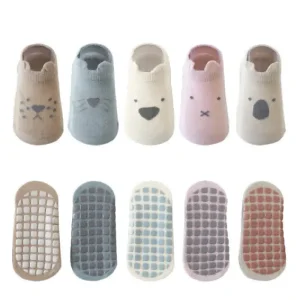
A key strength of MiFo is its advanced grip application department, which utilizes more than 10 dedicated automatic grip-molding and screen-printing machines. This setup allows for precise placement of custom-formulated non-slip elements, ensuring they meet the durability demands of commercial recreation parks. The company is a certified partner for international brands, major e-commerce sellers on Amazon and T-mall, and global entertainment companies, including Disney.
Market Applications
Custom polyester-blend non-slip socks are used across several key industries to improve safety, hygiene, and brand identity.
These parks require functional, non-slip socks for all guests. Custom designs featuring the park's logo and bright colors help support brand promotion while meeting insurance safety requirements.
Professional training requires consistent grip during routines. High-density polyester socks provide stability, helping athletes transition smoothly between ground training and apparatus work.
Practitioners need non-slip contact on mats and reformers. Breathable polyester-spandex blends offer the flexibility of bare feet combined with protective hygiene and grip.
Market Trends & Innovation
Modern commercial trampoline park operators look for key innovations when choosing manufacturing partners. The industry is moving away from generic products toward customized, high-performance designs that improve the user experience and support brand loyalty.
1. Recycled Polyester (rPET) & Sustainability: Global brands increasingly demand eco-friendly options. Using recycled polyester made from post-industrial PET bottles reduces the product's carbon footprint. Reliable manufacturers must balance these green materials with the durability required for active sports environments.
2. Ergonomic Foot Mapping & Compression: Today's socks use zoned elastic structures. Adding compression support around the arch helps keep the sock secure during dynamic twisting, reducing friction and blister risks.
3. Advanced Eco-Silicone Formulations: Traditional PVC grip pads are being replaced by high-grade eco-silicone. Silicone offers superior friction on canvas beds and remains flexible over longer periods, preventing cracking or peeling during commercial washing cycles.
Sichuan MiFo Technology focuses on product quality and technical advancement:
B2B Sourcing Playbook
When purchasing custom trampoline socks at scale, buyers should evaluate key manufacturing criteria beyond simple unit pricing. High-volume purchases require careful consideration of material quality, regulatory compliance, and supply chain reliability.
First, confirm the exact yarn blend. Premium trampoline socks are typically made of 80% high-grade polyester, 15% nylon for stretch recovery, and 5% spandex for a secure fit around the ankle. Standardizing these ratios helps ensure consistent performance across production batches.
Second, evaluate the grip application technology. Verify that the supplier uses automatic screen-printing machines to apply silicone or plastisol. The non-slip pattern must be applied evenly and cured at the correct temperature to ensure the grip elements stay bonded during intense use.
Third, review international compliance and safety certifications. Ensure the manufacturer holds valid credentials such as BSCI, Oeko-Tex Standard 100, and SGS evaluations. These audits confirm that the products are free of harmful chemicals and produced under fair working conditions, protecting your brand from potential liabilities.
Work directly with our team to access high-volume capacity, custom branding solutions, and certified quality standards for international markets.
Request Custom Design QuoteAnswers to Common Technical Questions
Polyester offers higher tensile strength, superior abrasion resistance, and minimal moisture retention compared to cotton. It wicks sweat away quickly, keeping feet dry and helping the non-slip grip elements stay securely bonded to the fabric.
MiFo Technology meets international quality and safety standards, holding BSCI, Oeko-Tex Standard 100, and ISO9001 certifications. Our products comply with consumer safety regulations in the US, EU, and Japan.
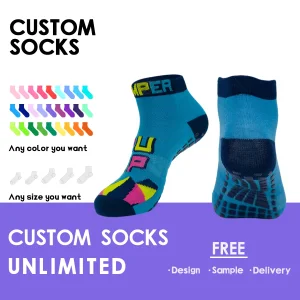
Yes. We offer complete OEM services, including custom non-slip patterns, logos, specialized sizing, and custom packaging. This helps commercial parks maintain a cohesive brand identity.
MOQ varies based on the design's complexity and color requirements. Typical custom production runs start at 1,000 to 3,000 pairs per design size, allowing for efficient setup of our computerized knitting machinery.
We use automated knitting and grip-application machines alongside manual quality checks at key stages of production. Sample pairs from each run undergo testing for wash durability and friction performance before final packaging.
Yes, we offer recycled polyester (rPET) yarns and eco-friendly silicone grips to help clients meet their sustainability goals without compromising on product durability or safety.