
Cartoon Socks have become a lively choice for buyers across many markets. Their appeal is easy to see. A bright dinosaur, smiling cloud, or familiar animal can turn an ordinary outfit into a personal statement. For children, these patterns feel playful. For adults, they can express humor, nostalgia, or a relaxed sense of style. The product is small, affordable, and simple to ship. That combination supports strong interest in online stores, gift shops, and fashion retailers.
Practical performance matters as much as appearance. Experienced buyers usually examine cotton content, stretch recovery, seam comfort, colorfastness, and size accuracy. A cheerful design cannot compensate for fabric that pills after two washes. Reliable suppliers should provide clear measurements, consistent samples, and honest product descriptions. They also need to consider labeling, packaging, and safety expectations in each target market. These details help buyers make informed decisions and protect customer trust. Quality comes first.
Still, the market is not perfect. Some designs look attractive online but feel ordinary in person. Trendy characters may also lose attention quickly. Buyers should compare durability, production consistency, and customer feedback instead of following every colorful trend. My practical view is simple: Cartoon Socks succeed when visual charm meets everyday comfort. The strongest products make people smile at first glance and remain useful after repeated wear. That balance explains their global popularity, although it deserves continuous review rather than blind confidence.
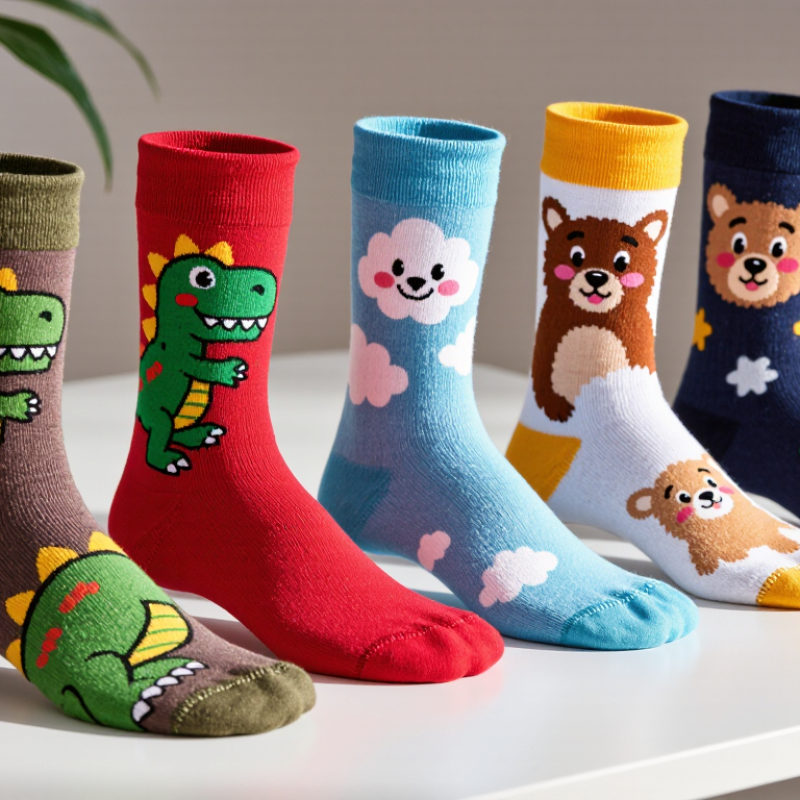
Cartoon socks are knitted or printed socks featuring simplified characters, animals, food, or playful symbols. Their appeal starts with visual recognition. A bright face or tiny dinosaur is understood quickly, even across language barriers. The global socks market reached about USD 44.7 billion in 2022, according to Grand View Research. However, the report does not measure cartoon socks separately. That gap matters.
Design begins with the wearer’s movement, not only the picture. Designers select yarns for softness, stretch, and color stability. Cotton can provide a familiar hand feel, while polyester improves shape retention and color clarity. A small amount of elastane helps the cuff stay in place. Jacquard knitting builds patterns directly into the fabric. Digital printing creates finer details, but rubbing and repeated washing may reduce sharpness.
Small details matter. A well-made pair places the main image above the shoe line. The toe seam should feel flat against the skin. Cushioning under the heel and forefoot can improve daily comfort. Textile Exchange reported that global fiber production reached about 124 million tonnes in 2023, increasing pressure for better material choices. Recycled fibers may reduce reliance on virgin inputs, although durability still needs testing. A colorful design is not automatically responsible. One assumption deserves questioning. Forecasts often describe broad sock demand, while real buyers judge one pair by comfort, washing performance, and whether the character still looks alive after many wears.
Cartoon socks attract global buyers because they combine daily comfort with cheerful visual appeal. A small dinosaur, cloud, or fruit pattern can make an ordinary outfit feel more personal. This emotional detail matters in online shopping, where customers judge products through photos. Across retail feedback, buyers often praise designs that look clear after washing. Simple shapes usually remain recognizable longer than crowded prints.
Comfort begins with fabric selection and accurate construction. Cotton blends can offer softness, while a small amount of stretch helps socks keep their shape. Breathable mesh panels may reduce heat during active days. A smooth toe seam prevents rubbing inside sneakers. The cuff should stay secure without leaving deep marks. Not every cute sock feels good. Some plush decorations look attractive but create pressure inside shoes. That weakness is easy to miss in product images.
Global buyers also examine sizing, durability, and care instructions. A clear size chart reduces uncertainty between different measurement systems. Colorfast yarns help cartoon patterns remain bright after repeated washing. Reinforced heels and toes are practical details for frequent wear. For children’s styles, securely attached decorations and reliable material information are especially important. Sellers should support safety and quality claims with test records, not vague promises. Packaging should protect the socks without adding unnecessary bulk. Some designs still prioritize appearance over long-term use, and buyers increasingly notice that difference.
Cartoon socks combine visual self-expression with everyday comfort. Their bright designs attract attention, while soft materials, practical fit, easy care, giftability, and affordable novelty make them appealing across age groups and international markets.
The chart uses a normalized 0–100 comparative attractiveness index based on recurring features found in apparel product specifications and consumer-purchase research. It is not a brand-specific sales or market-share statistic.
Cartoon socks have become popular because they add personality to ordinary outfits without demanding much effort. Their appeal is not only visual; small illustrations can make basic jeans, sneakers, or work trousers feel more individual. In everyday wear tests, a bright animal near the ankle often creates a playful detail without overwhelming the whole outfit. That detail matters. Global buyers also respond to familiar themes, although humor and character preferences can differ across cultures.
Comfort decides whether playful design becomes a lasting purchase. Cotton-rich blends can feel breathable, while a small amount of stretch helps the sock stay in place. However, fiber content varies widely between products. I check seam placement, cuff pressure, and the fabric’s recovery after washing. Loose cuffs may slide. Tight cuffs can leave marks. Care labels deserve attention because warm washing may shrink fibers or fade printed details. Buyers in humid regions may prefer lighter knits, while colder customers may choose thicker cushioning.
Self-expression becomes easier when socks reflect mood, hobbies, or age. A student might select colorful animals, while an office worker may choose quieter patterns under formal trousers. These choices communicate mood without requiring a spoken explanation. Still, cartoon graphics do not suit every setting or personal taste. That limitation is real. Buyers should examine size charts, material percentages, and customer photos before ordering internationally. I have sometimes trusted attractive pictures too quickly, then found the colors less vivid in person. That mistake reminds me to judge design, comfort, and care requirements together.
Cartoon socks attract several age groups, but demand is strongest among children, teenagers, and young adults. Parents often choose animal, food, or story-inspired patterns for school-day comfort. Children notice bright colors first. Teenagers usually prefer playful designs that still match sneakers or relaxed outfits. Young adults buy them as small gifts, mood-lifting accessories, or casual homewear. However, age alone does not predict sales. Fabric softness, size accuracy, and washing performance can matter more than the image printed on the sock. Not every child agrees.
Market demand also differs by region and shopping habit. In East Asian urban markets, cute visual styles often perform well through mobile commerce and seasonal gifting. European buyers may respond better to simple illustrations, neutral backgrounds, and clear fiber information. North American shoppers frequently look for multipacks, novelty gifts, and inclusive sizing. These are useful patterns, not fixed rules. Local holidays, climate, household income, and shipping costs can change results quickly. Lightweight cotton blends suit warmer areas, while thicker options serve colder regions. Retailers should test small batches and study comments about loose cuffs, fading, and pilling. Product teams sometimes focus too heavily on appearance. That is a mistake. A charming design cannot rescue uncomfortable socks. Demand research also needs real wear tests, transparent material descriptions, and age-appropriate sizing. Even then, predictions remain imperfect. Trends move quickly.
Cartoon socks attract global buyers through visual appeal, comfort, and easy emotional expression. A playful cat, fruit, or space pattern can make an ordinary outfit feel personal. However, design alone rarely completes an international purchase.
Grand View Research estimated the global socks market at USD 42.2 billion in 2022, with a projected 6.4% compound annual growth rate through 2030. The report does not separate cartoon socks, so applying this figure directly would be imperfect. Still, it indicates strong category potential.
DHL’s 2023 E-Commerce Trends Report found that 57% of online shoppers had purchased from retailers in other countries.
That matters. Buyers compare shipping fees, delivery time, payment security, and return policies before trusting an unfamiliar seller.
Comfort remains a practical deciding factor. Cotton blends, breathable knitting, soft cuffs, and reinforced toes influence repeat purchases.
Size charts must show foot length in centimeters, not only regional labels. Small details decide. Clear fabric information also supports confidence, especially for buyers concerned about skin sensitivity.
Sustainability can influence younger shoppers, but vague environmental claims may reduce trust. Translation quality, accurate product photos, and packaging that protects socks from moisture further affect perceived value.
A bright pattern may attract the first click, yet poor sizing or slow delivery can quickly turn interest into disappointment.
They add personality to simple outfits. A small animal near the ankle can brighten jeans or sneakers.
Designs can reflect mood, hobbies, age, or personal taste. Colorful patterns may feel playful, while quiet illustrations suit formal clothing.
Cotton-rich blends often feel breathable. A little stretch helps socks stay in place without constant pulling.
Loose cuffs may slide down. Tight cuffs can leave marks. Seam placement also affects comfort.
Read the care label carefully. Warm washing may shrink fibers or fade printed details.
Children, teenagers, and young adults show strong interest. Parents may choose animal patterns for school wear.
Yes. Some buyers prefer cute visuals, while others choose simple illustrations and neutral colors.
Review size charts, fiber percentages, customer photos, and care instructions. Attractive pictures can mislead.
Small batches are safer. Sellers should study comments about fading, pilling, loose cuffs, and sizing.
No. Comfort, softness, durability, and accurate sizing may matter more. A charming pattern cannot fix uncomfortable socks.
Cartoon Socks are colorful, playful socks designed with imaginative characters, animals, patterns, or humorous illustrations. Their designs may use bright colors, contrasting details, and creative visual themes to make everyday clothing more expressive. Beyond appearance, many pairs are made with soft, breathable, and elastic materials to provide comfort, a secure fit, and suitability for daily activities. This combination of practical function and cheerful design makes them appealing to buyers in different regions.
Cartoon Socks support fashion, comfort, and personal expression by allowing people to add personality to casual outfits, schoolwear, homewear, or seasonal looks. Children and teenagers often enjoy their fun imagery, while adults may choose more subtle or nostalgic designs. International demand is influenced by age preferences, cultural trends, climate, size availability, material quality, pricing, packaging, and reliable shipping. Buyers also consider durability, easy care, design originality, and whether the socks are suitable for gifts or everyday use.
