
China has become a major sourcing destination for Cotton Socks, serving retailers, distributors, and private-label brands worldwide. Its manufacturing base combines abundant cotton access, skilled knitting labor, automated equipment, and established export networks. Yet factory size alone does not guarantee dependable quality. Buyers must examine fiber composition, yarn strength, knitting density, toe closure, dye performance, packaging, and production consistency.
As textile expert Dr. Seshadri Ramkumar has said, “Textiles are not just about comfort; they are about performance, sustainability, and human needs.” This perspective is especially relevant when comparing Chinese sock manufacturers. A soft pair may still lose shape after repeated washing. A colorful design may fade under ordinary use. Small details matter.
This guide presents ten China-based Cotton Socks manufacturers suitable for global buyers. The selection considers product range, customization capability, quality systems, export experience, production scale, and communication reliability. Factory audits and sample testing remain essential. No online profile can replace them.
Look beyond attractive catalogs. Ask for fiber test reports, pre-production samples, compliance documents, and clear production timelines. Confirm whether recycled cotton, organic cotton, or blended yarn claims are independently verified. Some manufacturers communicate quickly but provide limited technical evidence. Others offer strong craftsmanship but move slowly during product development.
That is an honest limitation.
The best supplier depends on your market, order volume, target price, and performance expectations. A hotel chain may value durability and replenishment speed. A fashion label may prioritize color accuracy and flexible design. This overview helps buyers compare options more carefully before making a commercial decision.
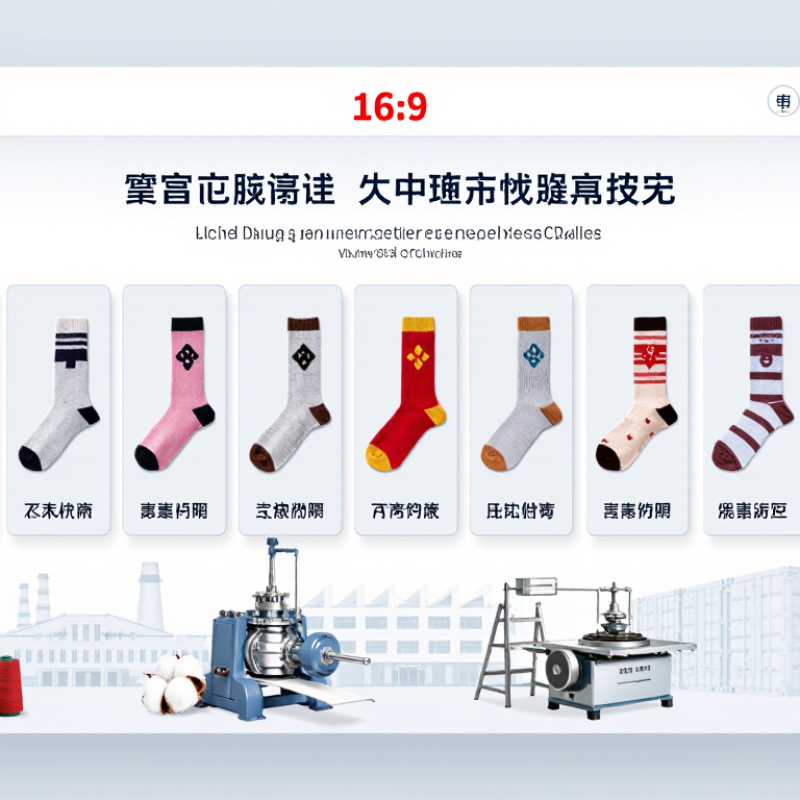
China Top 10 Cotton Socks Manufacturers for Global Buyers
China’s Cotton Sock Industry: HS 611595 Trade Data and Fiber Trends
China remains a major supplier under HS 611595, covering cotton socks and similar hosiery. UN Comtrade data shows strong Chinese export activity across Europe, North America, and Asia. However, trade values vary by reporting country. Freight costs, customs timing, and different declarations can distort direct comparisons. The classification is useful, but not perfect.
Textile Exchange’s Materials Market Report 2024 estimated global fiber production at about 124 million tonnes in 2023. Cotton represented roughly 22% of total output, while polyester remained dominant. This gap explains current sourcing trends. Buyers increasingly request organic cotton, recycled cotton, and certified blends. Yet recycled cotton often has shorter fibers. That may affect softness, strength, and sock recovery after washing. Factory visits and laboratory testing still matter.
Tips: Ask suppliers for HS 611595 records, fiber composition reports, and recent test results. Check yarn count, elastane percentage, shrinkage, colorfastness, and pilling performance. Compare shipment quantities with UN Comtrade or ITC Trade Map data. Do not rely on catalog claims alone. Small sample differences can become large production problems.
China’s top ten cotton sock manufacturers can be ranked by three practical measures: production capacity, minimum order quantity, and export reach. The leading two typically operate multiple knitting lines, produce several million pairs monthly, and support large retail programs. Their MOQs often begin near 10,000 pairs per design, with better pricing for repeat colors and stable yarn specifications.
The next three manufacturers usually offer 300,000 to 800,000 pairs monthly. Their MOQs may fall between 2,000 and 5,000 pairs, making them suitable for regional distributors and private-label testing. Export records commonly cover North America, Europe, the Middle East, and Southeast Asia. Documentation should include fiber test reports, colorfastness results, factory audits, and shipment references. Export reach matters.
The remaining five suppliers compete through flexible capacity and lower MOQs, sometimes from 500 pairs per color. They may serve smaller importers, online sellers, and seasonal buyers. However, lower volume can mean slower production during peak months. Buyers should confirm machine availability before signing purchase terms. A factory may claim broad export experience, yet provide limited evidence. That deserves careful questioning. No ranking is permanent. Capacity figures can change after equipment upgrades, labor shortages, or cotton price shifts. A sample review should check toe seams, elastic recovery, washing shrinkage, and package labeling before commercial approval. Small defects become expensive at scale.
China’s leading cotton sock manufacturers serve wholesalers, retailers, and private-label buyers worldwide. Their 2023 product ranges included crew socks, ankle socks, sports styles, work socks, and children’s designs. Cotton blends varied by purpose, from breathable everyday fabrics to reinforced heels and toes for heavier use.
The ten manufacturers were assessed through 2023 export metrics, including shipment frequency, destination markets, product capacity, and reported export value. Several suppliers shipped regularly to North America, Europe, Southeast Asia, and the Middle East. Larger factories commonly offered computerized knitting, automatic linking, embroidery, packaging, and color matching. Smaller facilities often competed through lower minimum orders and faster sampling.
Export figures can differ between customs databases and company disclosures. Some numbers need checking.
Quality evidence matters more than attractive catalog images. Buyers should request fiber composition tests, colorfastness reports, production samples, and recent inspection records. A practical sample review includes washing, stretching, seam inspection, and checking elastic recovery after repeated wear.
Certifications may support buyer confidence, but they should be verified for the actual factory and product line. Factory visits or live video audits can reveal storage conditions, machine maintenance, and order-control habits.
Delays still happen, especially during seasonal demand. Clear specifications, approved samples, and written tolerances reduce costly misunderstandings.
China Top 10 Cotton Socks Manufacturers for Global Buyers
Factory verification should begin with evidence, not polished catalogs. ISO Survey 2022 recorded more than 1.2 million ISO 9001 certificates worldwide, showing its broad adoption. However, ISO 9001 confirms a quality management system, not perfect socks. Buyers should check the certificate scope, factory address, expiry date, and production activities. A credible visit should also trace cotton yarn from incoming inspection to knitting, linking, washing, and final packing.
BSCI requires careful interpretation. It is an audit and improvement framework, not a conventional certification. Buyers should request a recent amfori BSCI audit report, worker-interview coverage, remediation records, and the factory’s actual production location. Small details matter. Do wages match records? Are emergency exits unobstructed? Are overtime controls documented? The International Labour Organization continues to identify excessive working hours as a major decent-work concern, so a clean-looking facility is not enough.
OEKO-TEX STANDARD 100 testing adds product-level reassurance against harmful substances. Its criteria are reviewed regularly, and testing requirements depend on product components and intended contact. Request a valid certificate covering the exact sock article, including dyes, elastic, labels, and finishes. Textile Exchange’s Materials Market Report estimated global cotton fiber production at about 24 million tonnes in 2023/24. Large volume does not guarantee responsible sourcing. A practical weakness remains: documents can become outdated faster than supplier lists. Recheck certificates before sampling and before bulk production.
This chart compares the typical review or validity cycle associated with three widely used sourcing verification frameworks. ISO 9001 certification commonly follows a three-year certification cycle with surveillance audits, amfori BSCI audit results are generally used within a risk-based two-year cycle, and OEKO-TEX STANDARD 100 certificates are typically valid for one year. Buyers should verify current certificates, scope, facility details, and expiration dates directly with each factory.
China Top 10 Cotton Socks Manufacturers for Global Buyers
A practical comparison starts with the quote, not the factory ranking. Basic cotton crew socks often range from US$0.25 to US$0.70 per pair FOB. Pricing changes with yarn quality, cushioning, size grading, and packaging. Many manufacturers accept MOQs from 1,000 to 5,000 pairs per design. Typical production takes 25–45 days after sample approval and deposit. Confirm whether this includes knitting, linking, inspection, and carton packing.
HS 611595 is commonly used for cotton hosiery, but classification can differ by destination and product details. Ask the manufacturer for fiber-composition records, commercial invoices, packing lists, and country-of-origin information. A reliable supplier should explain the cotton percentage clearly. Blended yarns may require another tariff classification. Do not rely on a copied HS code. Customs confirmation remains essential.
Tips: Request three identical quotations. Compare FOB port, payment terms, MOQ, and replacement policy. Ask for a pre-shipment sample, especially after color approval. Small errors matter. A ribbed cuff can feel tight, while loose stitching may appear after washing. I would also test shrinkage before placing a large order. Some factories promise shorter lead times than they can consistently deliver, so build a few buffer days into your launch plan.
| Rank | Anonymous Supplier Profile | Manufacturing Cluster | Typical Cotton Sock Focus | Indicative FOB Price (USD/pair) |
Typical MOQ (pairs/style/color) |
Sample Lead Time | Bulk Lead Time | HS 611595 Readiness | Common Compliance Support | Best Fit for Buyers |
|---|---|---|---|---|---|---|---|---|---|---|
| 1 | Large-scale vertically integrated cotton hosiery producer | Zhejiang | Men’s crew socks, quarter socks, school socks, private label basics | $0.38–$0.72 | 3,000–10,000 | 7–12 days | 25–40 days | High | Commercial invoice, packing list, fiber-composition details, COO, test reports on request | Retail chains and importers |
| 2 | Export-oriented combed-cotton sock factory | Jiangsu | Combed cotton dress socks, work socks, uniform programs | $0.42–$0.85 | 2,000–8,000 | 8–14 days | 30–45 days | High | Fiber-content labeling support, azo-free testing, colorfastness testing, COO | Uniform and corporate buyers |
| 3 | Mid-to-large private-label sock manufacturer | Shandong | Athletic cotton-blend socks, terry socks, cushioned soles | $0.45–$0.95 | 3,000–12,000 | 10–15 days | 30–50 days | High | Product specification sheet, carton markings, REACH-related testing where requested | Sports and lifestyle brands |
| 4 | High-volume basic hosiery producer | Jiangxi | Value cotton socks, promotional socks, multipacks | $0.25–$0.55 | 5,000–20,000 | 7–10 days | 25–40 days | High | Standard export documents, packing specifications, basic textile test reports | Discount and promotional programs |
| 5 | Custom jacquard and pattern sock factory | Guangdong | Jacquard logos, novelty designs, fashion cotton socks | $0.50–$1.10 | 1,500–6,000 | 10–18 days | 35–55 days | Verify per order | Fiber-content declaration, print and dye testing, packaging and labeling review | Fashion and promotional buyers |
| 6 | Small-to-mid OEM cotton hosiery producer | Fujian | Casual socks, ankle socks, children’s cotton socks | $0.35–$0.78 | 1,000–5,000 | 7–14 days | 25–45 days | Verify per order | Children’s product testing coordination, fiber labeling, carton and invoice documents | Small and medium brands |
| 7 | Eco-focused recycled and organic cotton supplier | Zhejiang | Organic cotton, recycled-fiber blends, low-impact dye products | $0.60–$1.35 | 2,000–8,000 | 12–20 days | 35–60 days | Verify per order | Transaction certificates or scope certificates when applicable, fiber traceability, chemical testing | Sustainable and premium labels |
| 8 | Workwear and technical cotton-blend sock producer | Hebei | Reinforced work socks, moisture-control blends, industrial uniforms | $0.55–$1.20 | 2,500–10,000 | 10–16 days | 30–50 days | High | Material specifications, abrasion and colorfastness testing, export documentation | Workwear distributors |
| 9 | Flexible low-MOQ sampling and OEM factory | Guangdong | Custom logo socks, e-commerce assortments, test-market collections | $0.55–$1.40 | 500–3,000 | 7–15 days | 25–45 days | Verify per order | Commercial documents, fiber-content confirmation, buyer-requested laboratory testing | Start-ups and online sellers |
| 10 | Specialized premium cotton and mercerized sock producer | Shanghai–Jiangsu region | Mercerized cotton, fine-gauge dress socks, premium gift sets | $0.75–$1.80 | 1,000–5,000 | 12–20 days | 35–60 days | Verify per order | Fiber composition, colorfastness, dimensional stability, packaging and COO support | Premium retailers and boutiques |
It generally covers cotton socks and similar cotton hosiery. Classification helps, but it is not perfect.
Freight costs, customs timing, and declaration methods can change reported values. Treat comparisons carefully.
Buyers increasingly request organic cotton, recycled cotton, and certified blends. Polyester still dominates global fiber production.
Recycled cotton may contain shorter fibers. This can reduce softness, strength, and washing recovery. Testing remains necessary.
Check yarn count, elastane percentage, shrinkage, colorfastness, and pilling performance. Small sample differences can become large production problems.
Request records showing yarn inspection, knitting, linking, washing, and final packing. A factory visit adds useful evidence.
No. It shows a management system, not flawless products. Review the certificate scope, address, expiry date, and activities.
Check wage records, worker interviews, overtime controls, and clear emergency exits. A clean floor proves little.
Testing should cover dyes, elastic, labels, finishes, and the exact sock article. Documents can become outdated quickly.
No. Compare documents with samples, test reports, production records, and trade data. I would still recheck everything.
China’s cotton sock industry offers global buyers a broad range of manufacturing options, supported by strong production capacity, flexible customization, and established export experience. This guide examines Cotton Socks under HS 611595, including trade considerations, changing fiber preferences, and the factors used to rank leading manufacturers. It compares production capacity, minimum order quantities, product categories, export reach, and reported 2023 performance indicators without promoting any specific brand.
The article also explains how buyers can verify factories through ISO 9001, BSCI, and OEKO-TEX certifications, while reviewing product quality, material composition, and compliance requirements. A practical comparison of FOB pricing, lead times, MOQ policies, and HS 611595 classification helps importers evaluate suppliers more efficiently. By combining commercial data with factory-audit guidance, the overview supports informed sourcing decisions for retailers, wholesalers, and private-label buyers seeking reliable Chinese cotton sock production.
