
China’s Knee High Socks industry serves retailers, sports brands, uniform suppliers, and private-label businesses worldwide. The market includes factories producing cotton, bamboo, wool-blend, compression, school, and performance designs. Choosing a reliable manufacturer requires more than comparing catalog photos or quoted prices.
This guide introduces ten Chinese manufacturers worth reviewing for different sourcing needs. We examine product range, knitting capabilities, material options, customization services, quality procedures, minimum order quantities, and export experience. We also consider practical details, such as sample accuracy, elastic recovery, toe-seam finishing, packaging, and communication speed. These factors often decide whether a shipment performs well after repeated washing.
The ranking is a starting point, not an absolute judgment. Factory strengths can change with equipment, staffing, certifications, and seasonal capacity. A company suitable for basic cotton socks may not handle technical compression designs effectively. Buyers should request recent samples, production photographs, test reports, and clear commercial terms before committing. Small checks matter.
From a sourcing perspective, the best partner is not always the largest factory. Consistent sizing, stable color matching, transparent lead times, and responsive problem-solving may create greater value. Some manufacturers may appear impressive online but provide limited evidence of current production capability. That deserves careful reflection. This overview aims to make supplier research more focused, practical, and evidence-based, while recognizing that every buyer’s standards, budget, and target market are different.
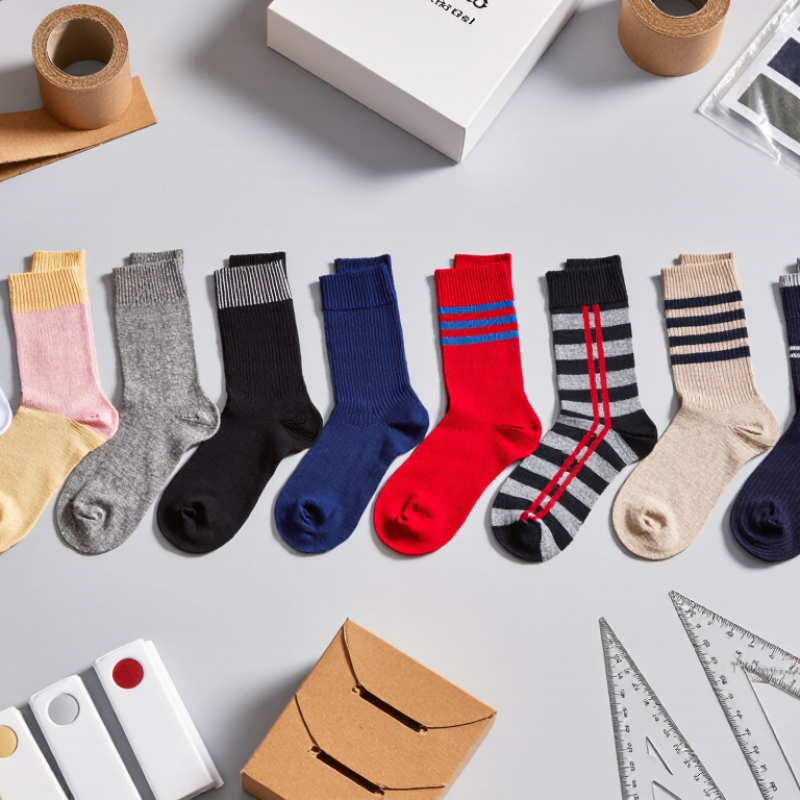
Knee-high socks are knitted garments that cover the foot and reach below the knee. They usually combine cotton or bamboo-derived fibers with nylon and a small amount of elastane. The blend affects softness, drying speed, stretch, and wear resistance. Reinforced heels and toes can reduce holes during repeated washing. The upper welt matters too; weak elastic may leave marks or slide down. In a well-run factory, technicians check yarn tension, knitting density, seam alignment, and color consistency. They also test stretch recovery and wash shrinkage before bulk packing. Details matter.
China produces many knee-high socks because its textile regions connect yarn suppliers, knitting workshops, dye houses, inspection teams, and export logistics. This concentration can shorten development time and support small or large production runs. Manufacturers can adjust patterns for uniforms, workwear, sports, medical support, or cold-weather layering. However, low price does not prove reliable quality. That assumption is incomplete. Factories differ in equipment, worker training, testing discipline, and environmental controls. Buyers should review fiber percentages, size measurements, restricted-substance documents, colorfastness results, and pre-shipment samples. A useful check is measuring a washed pair beside an unwashed pair. Some socks look excellent on display, then lose shape after several cycles. That gap deserves attention. Clear specifications and independent inspection make Chinese production more dependable, not automatic.
Evaluating China’s leading knee-high sock manufacturers requires more than comparing catalog photographs. Grand View Research estimated the global hosiery market at US$41.13 billion in 2022. Demand is large, but product quality remains uneven. A reliable supplier should show recent production records, export experience, and measurable quality controls.
Check the factory’s knitting machines, daily output, and sample approval process. Ask for test reports covering fiber content, colorfastness, shrinkage, and harmful substances. OEKO-TEX Standard 100 certification can support chemical safety claims, but verify the certificate holder and product scope. The WTO’s World Trade Statistical Review 2024 identifies China as a leading textile and apparel exporter. That scale helps, though it does not guarantee consistent workmanship.
Review the supplier through HS 6115 trade data from UN Comtrade, then compare declared products with actual samples. Request an independent factory audit. Inspect heel shaping, toe seams, elastic recovery, and packaging under normal lighting. An AQL inspection plan should define acceptable defect levels before production begins. A polished factory tour can still hide subcontracting. Ask directly.
Pricing deserves caution. Extremely low quotes may reflect thinner yarn, weaker elastic, or poor inspection coverage. I would test three wash cycles before approving bulk production. This step feels slow. It prevents expensive assumptions. Keep records of sample changes, test results, and corrective actions, because verbal promises are difficult to measure later.
China’s top 10 knee-high sock manufacturers should be judged by product strength, not factory size alone.
This ranking focuses on knitting precision, yarn selection, compression control, durability, and export readiness. Grand View Research estimated the global socks market at roughly USD 47 billion in 2023, with steady growth expected through 2030. That demand rewards suppliers with stable production systems.
The strongest manufacturers usually operate computerized knitting lines for uniform rib patterns and clean toe seams. They can produce cotton, bamboo, wool-blend, recycled polyester, and performance fibers. Better factories also test stretch recovery, colorfastness, shrinkage, and abrasion resistance. Small details matter. A loose cuff can ruin a retail program.
For athletic and medical-style products, product strength depends on more than appearance. Manufacturers with documented testing and traceable batches deserve higher positions. ISO-based quality systems, OEKO-TEX testing, and clear inspection records improve buyer confidence. The Global Organic Textile Standard also provides useful guidance for certified organic materials. However, certification alone is not proof of excellent socks. Some suppliers present impressive documents but weak samples. That is where the ranking needs caution.
China’s strongest knee-high sock producers also support private labeling, custom patterns, flexible minimum orders, and reliable packaging control. Buyers should compare at least three sample rounds before signing a long-term agreement. Factory visits remain valuable, although they cannot replace independent testing. Product strength is measurable, but never perfectly.
China Top 10 Knee High Socks Manufacturers: What Manufacturing Standards and Customization Options Matter?
Choosing among China’s top knee-high sock manufacturers requires more than comparing prices. Textile Exchange’s 2024 Materials Market Report recorded about 124 million tonnes of global fiber production in 2023. Polyester represented roughly 59%, while cotton accounted for about 19%. This matters when selecting yarn blends, because fiber choice affects breathability, stretch recovery, pilling, and drying speed. A reliable manufacturer should provide fiber composition records, colorfastness results, and traceable production batches. Details matter. Testing can include ISO 2062 for yarn strength, ISO 6330 for washing performance, ISO 105 methods for colorfastness, and ISO 12947 for abrasion resistance. These tests do not guarantee perfect socks, but they create measurable evidence.
Customization should cover more than logos and colors. Buyers can request rib height, welt pressure, cushion zones, arch support, toe-seam construction, and recycled or organic fiber options. A practical specification may define 15–20 mm rib spacing, reinforced heel and toe panels, and a controlled shrinkage limit after washing. Factories should also explain their inspection process, including measurement checks and defect sampling. Independent chemical screening is valuable when socks touch skin for long periods. However, recycled content can change softness and dye behavior. The cheapest option may fail after repeated washing. No checklist is perfect. Buyers still need pre-production samples, wash tests, and wear trials before approving a large order.
How to Select the Right Chinese Knee-High Sock Supplier
Choosing a Chinese knee-high sock supplier requires more than comparing online prices. Check whether the factory produces similar products regularly. Ask for recent photos, machine details, and production capacity. A reliable supplier should explain yarn composition, sock length, cuff structure, and knitting density clearly. Vague answers are warning signs.
Request samples before placing a large order. Measure the socks after washing, not only when new. Check shrinkage, colorfastness, toe seams, elasticity, and fabric recovery. A comfortable cuff should stay up without leaving deep marks. Confirm the fiber percentage through documented testing when accuracy matters. Review the factory’s quality procedures and packaging controls. Supplier audits, inspection records, and clear defect standards improve accountability.
Price still matters, but the lowest quote may hide weaker yarn or unstable sizing. Discuss minimum order quantities, sample charges, payment terms, and shipping schedules in writing. Ask how the supplier handles rework when measurements fail. Communication deserves careful testing. Send one technical question and observe the response time and precision. I once underestimated the effect of washing temperature on size, so production notes should include care conditions. No supplier is perfect. Leave room for correction, especially during the first order. A small trial batch can reveal problems before they become expensive.
| Rank | Manufacturer Profile | Production Base | Main Knee-High Sock Capability | Typical MOQ (Pairs/Color) |
Sample Lead Time | Bulk Lead Time | Material Options | Quality & Compliance Evidence | Customization Level | Indicative FOB Range (USD/Pair) |
Recommended Buyer Type |
|---|---|---|---|---|---|---|---|---|---|---|---|
| 1 | Manufacturer Profile 01 | Zhejiang | High-volume cotton, school, uniform, and athletic knee-high socks | 1,000 | 5–7 days | 25–35 days | Combed cotton, recycled polyester, nylon, spandex | Pre-production approval, needle inspection, colorfastness testing, third-party inspection accepted | High: custom patterns, stripes, jacquard, packaging, and labels | $0.55–$1.20 | Retailers, uniform distributors, and private-label importers |
| 2 | Manufacturer Profile 02 | Jiangsu | Fine-gauge dress socks and formal over-the-calf styles | 800 | 7–10 days | 30–40 days | Mercerized cotton, bamboo viscose, modal, nylon, elastane | Fiber-content verification, dimensional stability checks, AQL inspection available | High: fine knitting, logo embroidery, color matching, and retail packing | $0.70–$1.60 | Formalwear brands, department-store suppliers, and premium retailers |
| 3 | Manufacturer Profile 03 | Guangdong | Compression, support, travel, and performance knee-high socks | 1,500 | 7–12 days | 35–45 days | Nylon, polyester, spandex, moisture-management yarns | Graduated-pressure testing, wash testing, size grading, and batch inspection | High: pressure zones, cushioning, ventilation panels, and technical packaging | $1.10–$2.80 | Sports, travel, wellness, and medical-accessory distributors |
| 4 | Manufacturer Profile 04 | Shandong | Warm wool-blend and thermal knee-high socks | 1,200 | 8–12 days | 30–45 days | Merino wool, acrylic, cotton, polyester, recycled fibers | Pilling, warmth, shrinkage, colorfastness, and composition testing | Medium-high: yarn blending, terry cushioning, rib structures, and packaging | $0.95–$2.40 | Outdoor retailers, winter-wear wholesalers, and workwear suppliers |
| 5 | Manufacturer Profile 05 | Fujian | Athletic, football, basketball, and team-uniform socks | 1,000 | 5–8 days | 25–35 days | Polyester, nylon, spandex, cotton, moisture-wicking fibers | Abrasion testing, stretch recovery checks, size inspection, and carton audits | High: team colors, player numbers, grip zones, cushioning, and packaging | $0.60–$1.50 | Sports clubs, uniform contractors, and e-commerce sellers |
| 6 | Manufacturer Profile 06 | Zhejiang | Novelty, striped, patterned, and fashion knee-high socks | 600 | 5–9 days | 25–40 days | Cotton, polyester, acrylic, nylon, spandex, recycled yarns | Artwork approval, color matching, knitting inspection, and pre-shipment checks | Very high: custom artwork, intarsia, jacquard, labels, hangtags, and gift boxes | $0.65–$1.80 | Fashion labels, gift retailers, subscription boxes, and online stores |
| 7 | Manufacturer Profile 07 | Anhui | Basic cotton and blended socks for large-volume programs | 2,000 | 7–10 days | 30–40 days | Cotton, polyester, viscose, nylon, and elastane | In-line inspection, needle detection, packing verification, and final AQL checks | Medium: standard constructions with basic color and label customization | $0.38–$0.85 | Discount retailers, institutional buyers, and promotional distributors |
| 8 | Manufacturer Profile 08 | Jiangxi | Bamboo, organic-cotton, and recycled-fiber knee-high socks | 800 | 8–12 days | 30–45 days | Organic cotton, bamboo viscose, recycled polyester, hemp blends | Material certificates, restricted-substance testing, colorfastness, and shrinkage checks | High: sustainable yarn selection, custom packaging, and traceability documents | $0.75–$1.90 | Eco-conscious retailers and sustainable private-label brands |
| 9 | Manufacturer Profile 09 | Guangxi | Lightweight summer, school, and everyday knee-high socks | 1,000 | 6–10 days | 28–40 days | Cotton, bamboo viscose, polyester, nylon, and spandex | Size grading, colorfastness, seam strength, and finished-product inspection | Medium-high: custom colors, simple motifs, labels, and polybag packaging | $0.45–$1.05 | Schoolwear suppliers, mass retailers, and seasonal importers |
| 10 | Manufacturer Profile 10 | Hubei | Workwear, protective, and reinforced heel-and-toe socks | 1,500 | 8–12 days | 35–45 days | Cotton, polyester, nylon, acrylic, spandex, abrasion-resistant yarns | Abrasion, seam strength, wash durability, needle detection, and batch inspection | Medium-high: reinforced zones, cushioning, color coding, and carton labeling | $0.60–$1.40 | Industrial distributors, workwear contractors, and safety-equipment sellers |
| Supplier selection checklist: Confirm factory ownership, knitting capacity, material documentation, sample consistency, quality-control procedures, social-compliance records, payment terms, packaging requirements, export experience, and total landed cost before placing an order. | |||||||||||
They usually combine cotton or bamboo-derived fibers with nylon and elastane. The blend affects softness, drying speed, stretch, and durability. Details matter.
China connects yarn suppliers, knitting facilities, dye houses, inspectors, and shipping services. This network can shorten development time and support different order sizes.
Review fiber percentages, measurements, seam alignment, color consistency, and stretch recovery. Check the heel and toe for reinforcement. Low prices prove little.
Request pre-shipment samples and independent testing. Compare a washed pair with an unwashed pair. The difference may reveal shrinkage or loose shape.
A strong welt helps the sock stay below the knee without sliding. Weak elastic may leave marks or loosen after washing. Fit can change.
Many factories adjust colors, patterns, fibers, packaging, and size measurements. Some support uniforms, workwear, sports use, or colder layering.
No. Documents can support confidence, but samples and testing remain necessary. Some suppliers show strong paperwork and weaker products. That deserves reflection.
Compare knitting precision, yarn quality, testing records, minimum orders, and packaging control. Review at least three sample rounds before a long agreement.
No. A visit can reveal equipment, workers, and inspection routines. It cannot replace independent testing or washed sample checks. Confidence can be misleading.
Knee High Socks are versatile garments designed to cover the leg from the foot to below the knee, serving needs in sports, schoolwear, workwear, fashion, and everyday comfort. China has become a major production center because of its developed textile supply chain, broad material selection, skilled labor, efficient manufacturing capacity, and ability to support both large orders and customized projects. This article introduces the key factors buyers should consider when researching China’s top knee-high sock manufacturers.
It explains how to evaluate suppliers by examining product quality, knitting technology, material performance, production capacity, quality control, communication, and delivery reliability. The comparison focuses on manufacturers with different product strengths, such as athletic support, thermal warmth, moisture management, fashion designs, and customized patterns. It also discusses important standards, sizing accuracy, color consistency, packaging, sampling, and customization options. Finally, readers will learn how to match a supplier’s capabilities, minimum order requirements, pricing, certifications, and service model with their specific purchasing goals.
