
Choosing among Kids Socks Factories in China requires more than comparing prices or browsing polished factory photographs. A reliable supplier should prove its capabilities through samples, production records, testing documents, and clear communication. Buyers should examine knitting equipment, yarn quality, heel and toe reinforcement, elastic recovery, colorfastness, and packaging accuracy. Small details matter. A loose thread can damage a child’s comfort and a brand’s reputation.
Dr. Sheng Lu, a respected textile and apparel supply-chain scholar, offers a practical warning: “Sourcing decisions should be based on verifiable data, not attractive claims.” That principle fits the children’s hosiery market closely. Strong Kids Socks Factories usually explain their minimum order quantities, sample timelines, quality-control stages, and subcontracting policies without hesitation. They should also support appropriate safety testing and recognized certifications, such as OEKO-TEX Standard 100, when applicable. However, certification alone does not guarantee consistent production.
The best factory depends on your product, budget, order volume, and delivery expectations. A large exporter may handle complex seasonal programs efficiently. A smaller workshop may offer faster design adjustments and closer sampling support. Neither option is automatically better. Factory visits, third-party inspections, and repeated sample reviews provide stronger evidence than online rankings. Even careful buyers can miss weaknesses during a first order. That is an uncomfortable reality. This guide compares leading Chinese suppliers through practical criteria, including manufacturing experience, product specialization, quality systems, communication, customization, and supply-chain transparency. The goal is not to identify one perfect factory. It is to help buyers make a safer, more informed decision.
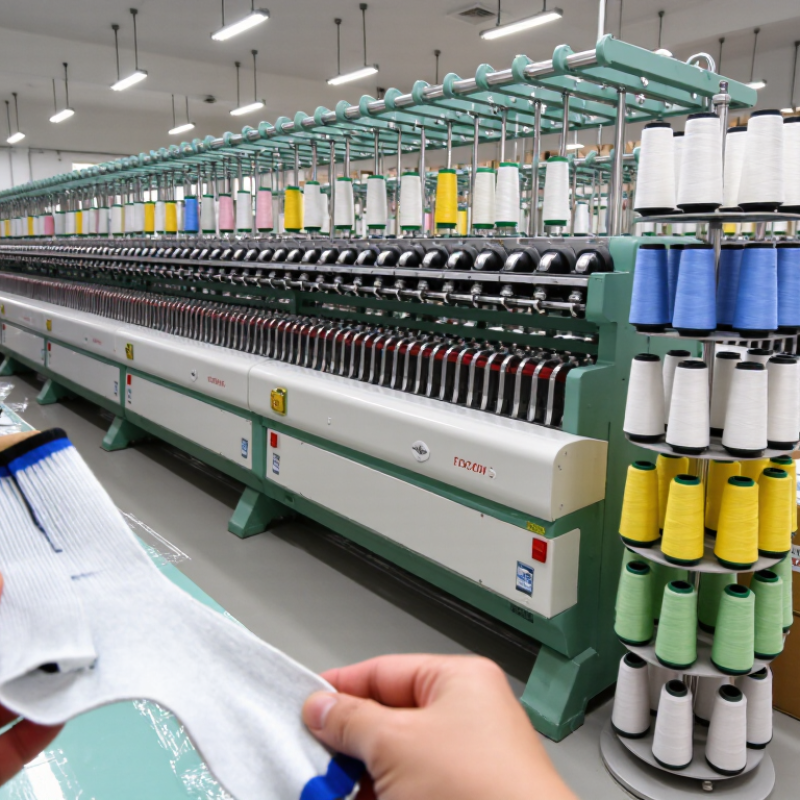
The best kids’ sock factories in China should be judged by documented safety and quality controls. OEKO-TEX® certification can show that tested materials meet defined limits for harmful substances. Check the certificate number, product scope, and expiry date carefully. A copied certificate proves very little.
ISO 9001 indicates a structured quality management system, not perfect production. During a factory review, ask for inspection records, corrective-action reports, and batch traceability. Good factories can identify the yarn lot, dyeing date, and final inspector. They should also explain how size, color, elasticity, and loose threads are checked. Details matter.
GB 18401 compliance is especially relevant for children’s textile products sold in China. Request current test reports covering applicable safety items, such as pH, color fastness, and banned aromatic amines. Confirm that the tested fabric matches the socks you will order. This step is often missed. It should not be.
Factory visits can reveal practical weaknesses. Look for clean storage, separated raw materials, calibrated equipment, and clear carton labels. Also inspect finished socks under bright light. Small defects may hide near the toe seam. No factory is flawless, and paperwork can become outdated. Reliable suppliers accept questions, show evidence, and correct problems without vague promises.
| Evaluation Dimension | Best-Practice Benchmark | Objective Compliance Indicator | Recommended Verification | Suggested Weight |
|---|---|---|---|---|
| OEKO-TEX® product safety | Finished socks should be covered by a valid OEKO-TEX® STANDARD 100 certificate. For products intended for babies and toddlers, Product Class I is the most stringent relevant class. | Certificate covers the actual sock construction, colors, coatings, elastics, prints, labels, and accessories—not only the yarn. | Check certificate number, product scope, issuing institute, validity period, and whether the tested article matches the production specification. | 30% |
| ISO 9001 quality management | The manufacturing site should operate under a documented ISO 9001-certified quality management system. | Certification scope includes hosiery, knitted products, textile manufacturing, or the relevant production activities performed at the site. | Verify the certificate issuer, site address, scope, issue date, expiry date, and current certification status through the certification body. | 20% |
| GB 18401 compliance | Products sold in China should meet the applicable requirements of GB 18401 for basic safety performance of textile products. | The product is correctly classified as Category A, B, or C according to its intended use and contact with skin; children’s products generally require the appropriate higher safety category. | Request a recent laboratory report covering formaldehyde, pH, prohibited aromatic amines, color fastness, odor, and other applicable test items. | 20% |
| Children’s textile suitability | The factory should understand the additional safety expectations for infant and children’s textile products, including age grading and component safety. | Age range, fiber content, care label, size information, and safety labeling are consistently documented and matched to the final product. | Review technical files, approved artwork, labeling samples, risk assessments, and applicable children’s textile test reports. | 10% |
| Material and component control | Yarns, dyes, elastic, silicone grips, prints, sewing threads, packaging, and other components should be traceable to approved suppliers. | Each incoming material has specifications, lot records, inspection results, and documented approval status. | Audit supplier lists, purchase records, incoming inspection procedures, and material traceability from batch to finished goods. | 8% |
| In-process and final inspection | A reliable factory should use documented inspection controls throughout knitting, linking, boarding, finishing, packing, and shipment. | Inspection records cover dimensions, weight, appearance, defects, color, pairing, labeling, packaging, and carton quantities. | Review quality-control plans, defect classifications, sampling standards, corrective-action records, and pre-shipment inspection results. | 7% |
| Traceability and corrective action | The factory should be able to identify the production date, machine or line, material lots, operators, inspectors, and shipment batch. | Nonconforming products are isolated, investigated, corrected, and verified before release. | Conduct a mock recall or batch-tracing exercise and review corrective-action effectiveness records. | 5% |
| Total Evaluation Weight | 100% | |||
Start with documented safety and quality controls. Ask for current certificates, test reports, and inspection records. Check certificate numbers, factory addresses, product scopes, and expiry dates. A copied document proves very little. Details matter.
Request reports covering pH, color fastness, and restricted chemical substances. Confirm the tested fabric matches the socks you will order. Check the yarn blend, dyeing process, and finished product description. This step is often missed. It should not be.
Ask for batch traceability and corrective-action reports. The factory should identify the yarn lot, dyeing date, and final inspector. It should explain checks for size, color, elasticity, and loose threads. Good records reveal problems quickly. Paperwork is not perfection.
Look for clean storage and clearly separated raw materials. Check whether measuring equipment receives regular calibration. Inspect carton labels and finished socks under bright light. Small defects often hide near the toe seam. Look closely.
Zhejiang has dense hosiery supply chains and many supporting services. It may suit cotton socks, school styles, and large repeat orders. Nearby knitting, dyeing, labeling, and packing can shorten development time. Quality still varies between workshops. Sample carefully.
Jiangsu may suit buyers needing organized production and stable process management. It can handle blended fabrics, sports designs, and private packaging. Guangdong may support fast samples and fashion-focused programs. Some suppliers may subcontract production. Audit them.
Shandong may suit cotton programs and suppliers experienced with domestic demand. Lead times and design responsiveness can differ between facilities. Ask about shrinkage, colorfastness, and pre-production samples. Low cost can hide weak controls. Be cautious.
Compare at least three quotations using identical specifications. Include order volume, testing requirements, packaging, and delivery terms. Measure toe seams, elastic recovery, washing loss, and carton accuracy. I would compare four samples, not four quotations. My method is imperfect.
Give safety documentation the greatest weight. Then assess sample accuracy, customization, price transparency, and verified export experience. Request repeat-order evidence and redacted shipping documents when appropriate. A polished showroom proves little. Trust evidence, not promises.
Choosing the best Kids Socks Factories in China requires more than comparing prices. A reliable supplier should demonstrate compliance with OEKO-TEX®, ISO 9001, and GB 18401 requirements, while also maintaining consistent quality and transparent production controls. Major manufacturing clusters in Zhejiang, Jiangsu, Guangdong, and Shandong may offer different advantages in materials, technology, labor resources, and export experience. Buyers should compare each region according to product specialization, logistics, and communication efficiency.
Factory screening should include minimum order quantities, expected 30–45-day lead times, monthly production capacity, and flexibility for custom designs. Children’s sock safety must be verified through AQL 2.5 inspections, colorfastness testing, stretch and recovery checks, and seam-strength evaluations. A practical supplier ranking should combine certifications, customization capabilities, pricing transparency, delivery reliability, and proven export records. By reviewing samples, factory documentation, quality reports, and production processes before placing an order, buyers can select a dependable partner for safe, durable, and well-made children’s socks.
