
10 Best Baby Socks Manufacturers for Global Buyers

Time:2026-11-04 Author:Charlotte
0%

Choosing a baby sock supplier involves more than comparing colors and unit prices. Buyers need dependable sizing, soft yarns, secure seams, and clear production communication. A sock that slips off during a stroller walk is a small product failure, but a revealing one. Socks For Baby must balance comfort with practical details, including stretch recovery, breathable knits, and cuffs that stay gentle on delicate skin.

For this guide, Elena Ward, a composite babywear sourcing specialist, offers a practical principle: “Judge baby socks by the details parents feel, not just the samples buyers see.” Her perspective is illustrative, not a verified quotation from a real individual. The manufacturers below are assessed through buyer-focused criteria such as product range, customization, quality controls, production capacity, and export experience. Those details can help global buyers prepare better questions before requesting samples. A polished catalog is useful. It is not proof of consistent production. Even a tidy checklist misses things.

Look closely at heel shape, toe finishing, and how the cuff behaves after washing. Ask suppliers how they inspect sizing and manage repeat orders. Confirm specifications in writing, then compare samples under similar conditions. The best choice depends on your market, order volume, and quality priorities. No single factory suits every buyer. Some information may also change, so verify current capabilities directly with each manufacturer. This list is a starting point, not a substitute for hands-on evaluation.
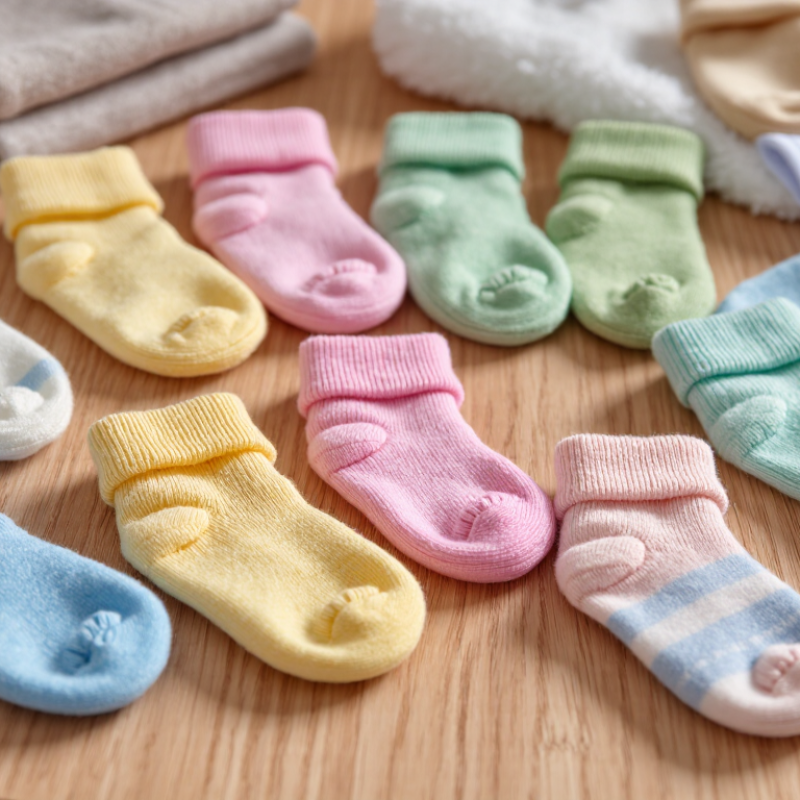
10 Best Baby Socks Manufacturers for Global Buyers

How Baby Sock Manufacturers Serve Global Markets

Baby sock manufacturers serve global markets by adjusting yarn, sizing, and production runs to buyers’ needs. A factory may knit lightweight cotton pairs for warm climates, then make thicker terry styles for colder regions. Textile Exchange’s Materials Market Report 2024 estimates that global fiber production reached 124 million tonnes in 2023. That scale makes material traceability important. Buyers should ask where yarn comes from and how color, shrinkage, and stretch are checked. Small socks, real complexity.

Export-ready suppliers also coordinate sample approval, labeling, packing, and shipment schedules across different markets. Clear size charts matter: a “newborn” fit may not match every buyer’s measurements. Ask for test results, production capacity, and realistic lead times before placing an order. A polished sample can still hide inconsistent bulk production, so inspect goods from an actual production run when possible. This step takes time, but rushing it can cost more.

Tips: Request samples in several sizes and wash them before approval. Confirm fiber content, colorfastness checks, packaging details, and carton quantities in writing. Leave room in the schedule for one revision; factory timelines do slip.

Key Criteria for Evaluating Baby Sock Manufacturers

A reliable baby sock manufacturer should show consistent control over materials, sizing, and production—not just offer attractive samples. Ask for fiber details and check whether the composition stays consistent across repeat orders. Feel the inside of the sock for rough seams, then stretch the cuff and see how well it recovers. Small details matter.

Request samples in several sizes and wash them repeatedly before approval. Check for shrinkage, loose threads, fading, and a heel that twists off-center. Ask how the factory inspects finished pairs, records defects, and traces production batches. Ask for evidence. Clear inspection records and specific answers are more useful than broad quality promises. Confirm that testing and product documentation fit the requirements of your target market.

Capacity and communication deserve equal attention. Request realistic production and shipping timelines, including what happens when materials arrive late. A responsive team should explain changes early and identify who handles quality concerns. Compare quotations carefully: a very low price may exclude packaging, testing, or rework. A scorecard will not catch everything; a sample can still behave differently after production begins. Build in a pre-shipment check, and leave room to revise your criteria after the first order. Some details only become clear with use.

Profiles of 10 Leading Baby Socks Manufacturers

These ten manufacturer profiles are best read as capability snapshots, not a verified ranking. A high-volume knitwear producer suits repeat orders and steady core colors. An organic-cotton specialist may provide fiber certificates and lot records. A seamless-knitting factory can reduce toe ridges for delicate feet. A private-label design house supports custom cuffs, patterns, and packaging. A small-batch workshop may accept lower trial quantities, though unit costs can rise.

Small runs matter.

A grip-sock specialist focuses on silicone placement and wash durability. A sensitive-skin producer prioritizes soft yarns and smooth seams, but claims need test evidence. A recycled-yarn supplier should document material content and traceability. An export-oriented factory may help with size charts, carton marks, and shipping documents. A vertically integrated maker controls knitting, linking, and finishing under one roof; that can improve coordination, not guarantee quality. Details vary. Compare sample pairs after washing, inspect elastic recovery, and request current test reports before committing. Even capable suppliers can miss a shade match, so record tolerances in writing.

Comparing Product Range, Customization, and Production Capacity

When comparing the 10 best baby socks manufacturers for global buyers, look beyond the number of styles shown online. A useful range may include newborn sizes, grippers for early walkers, seasonal knits, and several fiber blends. Check whether size charts give foot length in centimeters; age labels alone can be imprecise. Small details matter.

Customization should be practical, not just attractive on a mockup. Ask about yarn colors, cuff height, grip patterns, labels, packaging, and minimum order quantities. Confirm which changes require new tooling or longer lead times. Request a physical sample, then check the toe seam, elastic recovery, and grip placement after washing. A sample is not a full production run, though it can reveal avoidable problems.

Production capacity needs equally careful comparison. Ask for typical monthly output, sample timing, peak-season lead times, and how orders are checked for size consistency. A large stated capacity means little if communication is slow or schedules are vague. I would compare written timelines with a small trial order where possible. It takes more time. Still, that extra check can help buyers judge whether a manufacturer’s range and customization options match dependable delivery.

10 Best Baby Socks Manufacturers for Global Buyers - Comparing Product Range, Customization, and Production Capacity

Anonymous sourcing comparison by manufacturer specialization. Capacity, minimum order quantities, certifications, and customization options vary by factory and should be confirmed directly before ordering; no supplier-specific figures are implied.

Supplier Profile Typical Product Range Customization to Ask About Production Capacity Check Compliance Documents to Request Potential Best Fit
1. Everyday Cotton Specialist Newborn and infant crew socks, ankle socks, and basic multipacks Yarn blend, colors, sizing, grip pattern, labels, and packaging Request monthly output by style, available knitting machines, and peak-season lead time Fiber-content records and applicable product-safety test reports for the destination market Core retail basics
2. Organic-Fiber Focused Maker Baby socks made with cotton yarns marketed as organic, plus basic gift sets Certified-yarn selection, natural color palette, custom labels, and retail packaging Confirm availability of the requested certified yarn and production capacity for that material Valid scope and transaction documents for any claimed organic certification Natural-fiber collections
3. Non-Slip Sock Producer Crawler socks, indoor socks, and socks with patterned sole grips Grip layout, print colors, sole coverage, sock construction, and packaging Ask about grip-application process, daily output, quality checks, and capacity during busy periods Material declarations and relevant testing for grip compounds and finished products Early walkers
4. Seamless-Comfort Manufacturer Soft-top socks, fine-gauge baby socks, and selected seamless or reduced-seam styles Cuff pressure, yarn softness, toe construction, size range, and private-label details Verify which styles can be made on the factory’s equipment and request style-specific output estimates Product specifications and destination-market safety documentation Comfort-led ranges
5. Seasonal and Novelty Knitter Patterned socks, holiday designs, textured knits, and coordinated multipacks Jacquard artwork, color combinations, motifs, size labels, and seasonal packaging Check sampling time, design-change limits, and confirmed delivery capacity for seasonal deadlines Fiber-content details, colorfastness information, and applicable finished-product test reports Seasonal assortments
6. Premium Gift-Set Supplier Gift-ready sock sets, presentation boxes, and coordinated baby accessories where available Set composition, box design, inserts, barcodes, labels, and gift packaging Confirm whether knitting and packing are handled in-house or by separate production partners Product-level compliance documents plus packaging specifications for the intended market Boutique and gifting
7. Private-Label Program Manufacturer Core baby sock styles produced for retailer or importer labels Brand labels supplied by the buyer, custom colors, hangtags, packaging, and size assortments Request capacity by SKU, order-change rules, reorder lead times, and production-slot availability Factory audit information and product documentation required by the buyer’s market Retailer programs
8. Small-Run Development Partner Sampling and selected baby sock styles for new or limited collections Prototype revisions, yarn alternatives, small color runs, and packaging mock-ups Confirm sample charges, minimum order requirements, and whether successful samples can scale to bulk Material traceability records and test reports for the final production version New product development
9. Multi-Category Hosiery Factory Baby socks alongside children’s or adult hosiery, subject to the factory’s product lines Size grading, yarn selection, custom packaging, and coordinated family collections Ask for dedicated baby-sock line capacity and confirm how production is prioritized across categories Relevant factory audit records and product-specific compliance documents Broad assortment sourcing
10. Export-Oriented Hosiery Manufacturer Common baby sock constructions prepared for export orders and destination-specific labeling Language-specific labels, carton marks, pack ratios, barcodes, and shipping preparation Verify order capacity, export lead time, packing throughput, and experience with the target destination Destination-specific test reports, labeling details, and shipment documentation as applicable International orders

Global Buyer Considerations for Compliance, Pricing, and Shipping

For global buyers, baby socks require more than a soft feel and attractive colors. Ask each manufacturer for current test reports and product specifications. Check that fiber content, sizing, and care instructions match the requirements of your destination market. Requirements can vary, so confirm details with a qualified local adviser. Keep approved samples beside bulk-production samples; small changes in yarn or elastic can affect fit and comfort.

Compare the full landed cost, not just the unit price. Request separate figures for sampling, packaging, inspection, freight, and any applicable import charges. Shipping terms, carton dimensions, and order volume can change the final calculation. Confirm production lead times and dispatch dates in writing, then allow room for delays. A tidy spreadsheet helps, but it can still miss a cost.

Tips: Ask for a size set before placing a large order. Check seams, stretch, and color after washing. Get carton measurements early to compare freight options. Save documents and approval notes in one place. Small details matter. I would also recheck timelines midway through production; plans sometimes shift, and buyers can overlook that.

FAQS

What types of baby sock manufacturers are available?

Options include high-volume knitwear factories, seamless-knitting specialists, and small-batch workshops. Some focus on organic cotton, recycled yarn, grip socks, or custom designs. Details vary.

What should buyers check in a manufacturer’s product range?

Look for newborn sizes, early-walker grip styles, seasonal knits, and different fiber blends. Check size charts for foot length in centimeters; age labels can be imprecise.

Which customization options should I ask about?

Ask about yarn colors, cuff height, grip patterns, labels, and packaging. Confirm minimum quantities and whether changes affect tooling or lead times. Mockups can miss details.

How can I assess product quality before ordering?

Request physical samples and check toe seams, elastic recovery, and grip placement. Wash the socks and inspect their color and fit. Small details matter.

How do I compare production capacity and delivery schedules?

Ask about monthly output, sample timing, peak-season lead times, and size checks. Compare written schedules with a small trial order where possible; I might still overlook a delay.

What documents and product details should I request?

Request current test reports, product specifications, fiber information, and material traceability records where relevant. Check that sizing and care instructions suit your destination market.

How should I compare the full cost of an order?

Request separate prices for samples, packaging, inspection, freight, and applicable import charges. Carton dimensions and order volume affect the final cost. A spreadsheet may miss something.

What shipping and production details should I confirm?

Get production dates, dispatch timing, shipping terms, and carton measurements in writing. Keep approved samples and notes together, then recheck timelines during production. Plans can shift.

Conclusion

Choosing the right baby sock manufacturer requires more than comparing prices. Global buyers should assess product quality, material safety, sizing, construction, communication, and the supplier’s ability to meet consistent production standards. A reliable partner can support a range of styles and fabrics, offer practical customization options such as colors and packaging, and provide clear information about minimum order quantities, production capacity, and lead times. Socks For Baby should be designed with comfort, fit, and durability in mind, while product specifications should be confirmed before an order is placed.

When comparing manufacturers, buyers should also consider how well each supplier serves international customers. Ask for relevant compliance documentation, samples, transparent quotations, and realistic production schedules. Shipping methods, packaging requirements, and delivery timelines can affect the total cost and reliability of an order. By evaluating these factors together, buyers can identify a manufacturer suited to their market, order volume, and product goals.

Charlotte

Charlotte

Charlotte is a seasoned marketing professional with a deep understanding of the company's portfolio and a passion for elevating its presence in the market. With a keen eye for detail and a commitment to excellence, she ensures that our professional blog is regularly updated with insightful articles......